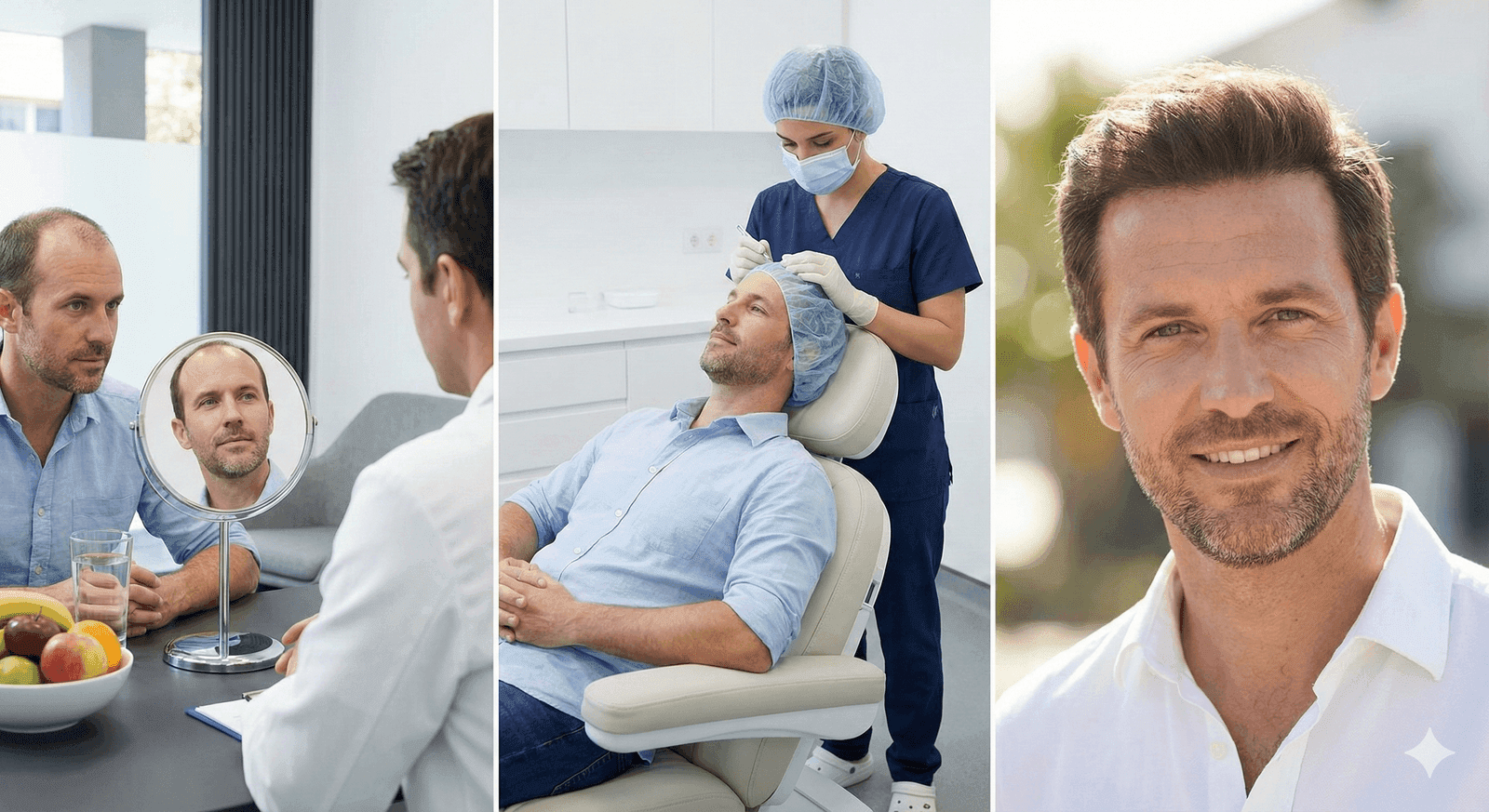
A hair transplant may look like a procedure that begins and ends in a single day, but what really determines the outcome is the preparation beforehand, the planning of the operation itself, and the care that follows.
In this article we look at the process under three headings:
- What to do before a hair transplant
- What to expect on the day of the operation
- Aftercare and the recovery process
Preparing for a Hair Transplant (1–2 Weeks Before)
The weeks before your operation have a direct effect on how much benefit you get from it. This is the time to prepare both your body and your scalp.
Medication
- Aspirin and blood thinners should be stopped where possible, or adjusted in consultation with your doctor
- Supplements with a blood-thinning effect, such as vitamin E and fish oil, should be avoided
- If you take regular medication, tell your doctor so the plan can be adapted accordingly
Alcohol and Smoking
- Cut down on smoking at least a week before the operation, and stop entirely if you can
- Smoking restricts blood flow and can have a negative effect on how well grafts take
- Alcohol should be stopped a few days beforehand, as it can increase the risk of bleeding
Hair and Scalp Care
- Avoid chemical treatments such as colouring, keratin and perming for 3 to 4 days before the operation
- Keep the scalp clean, and wash your hair with a mild shampoo on the morning of the procedure
- Do not use styling products such as gel, wax or hairspray
Diet and Hydration
- Increase your water intake and stay well hydrated
- A balanced diet supports the healing process
- Do not arrive on an empty stomach — have a light breakfast
What to Wear
- Choose a buttoned or zipped top for the day of your operation
- Tight t-shirts and jumpers pulled over the head can catch on the recipient area and cause damage
- Loose, comfortable clothing that comes off easily makes recovery more comfortable
The Day of the Operation
A hair transplant is usually completed within a single day, but it is a detailed procedure that takes several hours.
The Morning Routine
- Wash your hair with shampoo, rinse thoroughly and apply nothing afterwards
- Have a light breakfast and avoid heavy, fatty foods
- Take any necessary medication exactly as your doctor has advised
During the Procedure
- A hair transplant can take an average of 6 to 8 hours
- It is performed under local anaesthesia, which keeps discomfort to a minimum
- To make the hours more comfortable, feel free to bring:
- A phone, tablet or headphones
- A book or magazine
The First 24 Hours
- Keeping your head elevated while sleeping matters; resting at roughly a 45° angle is advised
- The recipient area must not be rubbed, scratched or knocked
- Pain relief can be taken if needed, on your doctor's advice
- A cold compress can be applied to the appropriate areas for forehead swelling (never directly on the recipient area)
Aftercare (The First Week)
The first week is the most delicate period after a hair transplant, and the care you take during it has a direct effect on your long-term result.
The First 3 Days
- Do not wash your head (the specific instructions from your clinic always take priority)
- Take care not to make contact with the recipient area while sleeping, dressing or moving around
- Avoid strenuous exercise, bending forward and lifting anything heavy
- Try not to spend long periods with your head bent down
Days 4 to 7
- Following your clinic's instructions, you can begin a very gentle washing routine with the special shampoo and lotion you were given
- Keep the water pressure low, and avoid direct contact with a strong shower head
- Allow the crusts to fall away on their own — never pick them off with your nails or scrub at them
The First Month
- Stay away from strenuous exercise, running, weights and contact sports
- Limit direct sun exposure, and use a hat if necessary (with your doctor's approval)
- Avoid the sea, swimming pools, saunas, hammams and steam rooms for the period you have been advised
- Avoid any activity that risks a knock to the head
The Longer Term
Hair transplant results emerge over time. Patience and an understanding of what is happening at each stage make the process much easier.
Months 1 to 3
- A significant proportion of the transplanted hairs may shed during this period. This is entirely normal and is known as "shock loss"
- The follicles remain beneath the skin; this shedding does not mean the follicle has been lost
- Sensitivity in the scalp gradually decreases and daily life becomes easier
Months 3 to 6
- New hair gradually begins to grow
- Over the following months the hair thickens and gains volume
- The hairline and density start giving their first real signals
Months 6 to 12
- Most of the new hair has come through
- The quality, direction and naturalness of the hair become clear
- This is the period in which the result largely settles
In some cases, final results can take 12 to 18 months to settle fully.
Key Points to Remember
Here is a summary of what to do and what to avoid after a hair transplant.
What to Avoid
- ❌ Scratching or rubbing the recipient area
- ❌ Trying to lift the crusts off with your fingers or nails
- ❌ Strenuous exercise and heavy exertion in the first weeks
- ❌ Long periods in direct sunlight
- ❌ The sea, swimming pools and saunas in the early period
- ❌ Applying any product to the scalp that your doctor has not recommended
- ❌ Heavy smoking and drinking
What to Do
- ✅ Follow all the instructions your doctor gives you
- ✅ Attend every follow-up appointment
- ✅ Use the special shampoo and care products exactly as described
- ✅ Drink enough water and eat well
- ✅ Be patient — remember that this process unfolds over months
Follow-Up and Support at Nirvana Hair
At Nirvana Hair we do not see a hair transplant as something that begins and ends on the day of surgery. We treat it as a journey from start to finish.
- Day 1 check-up: initial assessment and removal of dressings (according to protocol)
- Week 1 check-up: washing, crusting and healing assessed
- Month 1 check-up: guidance on the shock loss phase
- Month 3 check-up: assessment of the first new hairs
- Month 6 check-up: analysis of density and hair quality
- Month 12 check-up: assessment of the final result and any further recommendations
These check-ups let us follow the process closely and give our patients one-to-one guidance at every stage.
In Summary
A successful hair transplant depends not only on the operation being performed well, but on the preparation beforehand and the aftercare that follows being managed properly.
- Good preparation
- Disciplined aftercare
- Patience and regular follow-up
Together, these are what make natural, satisfying results possible.
At Nirvana Hair we create a personalised hair transplant and aftercare plan for every patient, and stay with them at every stage of the process. Get in touch for detailed information and a free initial consultation.