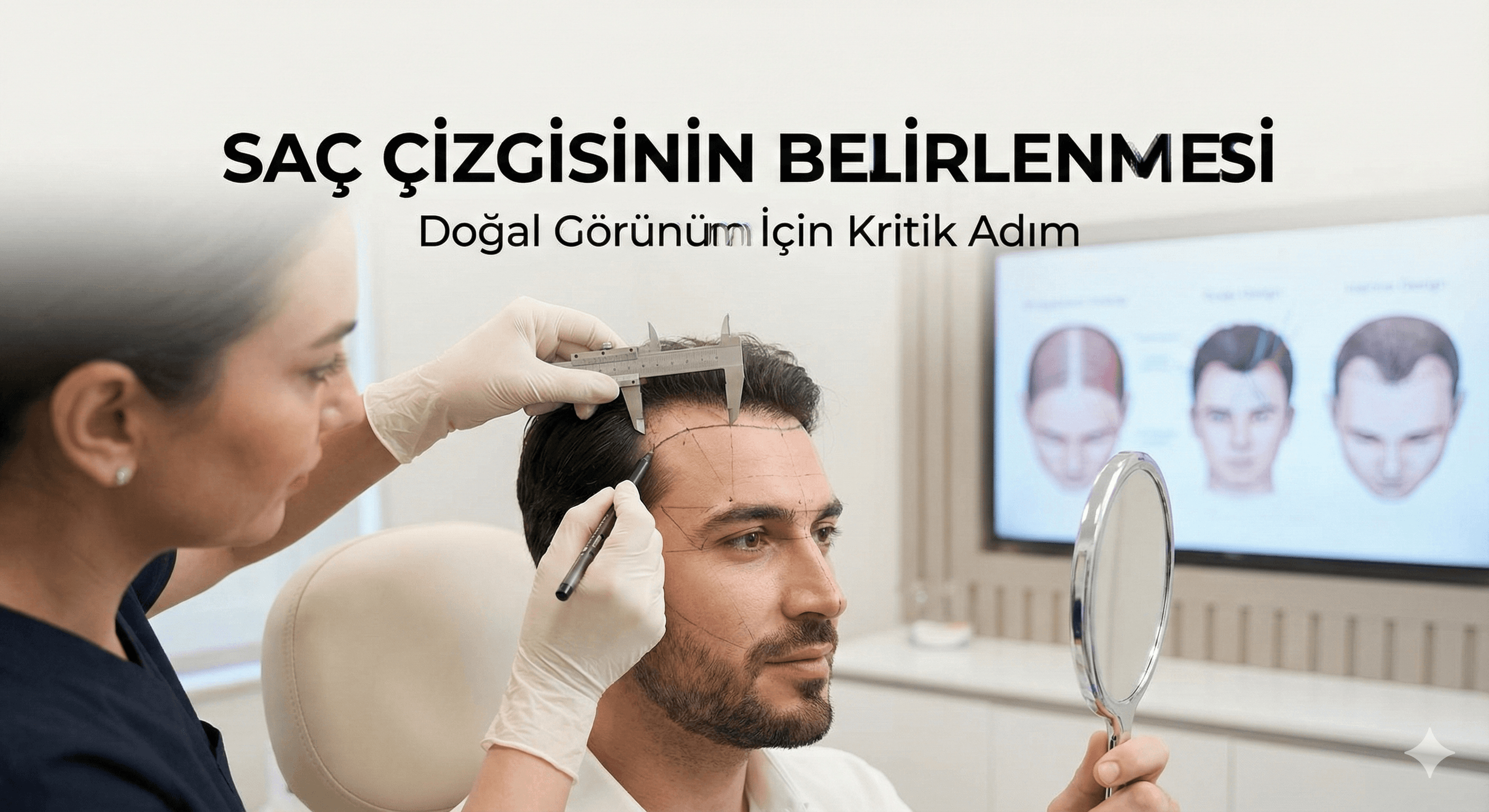
In hair transplantation, designing the hairline is the stage that decides whether the result looks natural or not. A successful transplant is not about density alone; it depends on a hairline that suits your facial proportions, matches your age and blends in through soft, irregular transitions.
In this article we cover:
- Why does the hairline matter so much?
- What types of hairline are there?
- How is a natural hairline designed?
- What are the most common design mistakes?
Why the Hairline Matters So Much
The hairline is one of the details that most strongly shapes the overall expression and aesthetic balance of the face. A well-designed hairline:
- Balances the facial features
- Creates a younger, more energetic appearance
- Prevents the transplant from looking artificial
- Delivers a result that still looks natural years later
For this reason, hairline design is the stage where hair transplantation becomes as much art as technique.
Hairline Types
A hairline can be designed in different ways depending on facial structure and aesthetic goals.
1. Straight Hairline
Characteristics:
- Creates a horizontal, even line across the forehead
- Gives a younger, more defined appearance
- Does not suit every face shape
- Generally preferred in younger patients
2. Rounded (M-Shape) Hairline
Characteristics:
- Has a slight recession in the centre of the forehead
- Is the closest form to the natural anatomy of hair loss
- Works with most face shapes
- Continues to look natural as you age
3. V-Shaped Hairline
Characteristics:
- Creates a distinct point in the centre of the forehead
- Gives a more masculine facial expression
- Can be effective in people with a broad forehead
- Can look artificial if designed too sharply
What to Consider in Hairline Design
Designing a hairline is not simply a matter of drawing a "line". Facial anatomy, age, facial movement and hair texture all have to be assessed.
1. Suitability to Facial Features
The right hairline is different for every face shape:
- Round face: a design placed higher, which lengthens the face
- Long face: a design placed lower, which balances the proportions
- Square face: a softly rounded hairline with gentle transitions
- Oval face: a classic design that preserves the natural line
2. The Age Factor
Age plays a critical role in hairline design:
- Younger patients: lower, more defined lines
- Middle age: slightly rounded, balanced lines
- Older patients: a more natural line, sitting slightly further back
A hairline designed too aggressively for a young face tends to look artificial in later years and can create the need for further work.
3. Micro-Irregularity for a Natural Look
A natural hairline is never a straight line. Small deliberate irregularities (micro-irregularity) are built in so that the line reads as real:
- Fine, single-hair grafts are used along the front row
- A softly undulating edge is created
- Hairs are placed at slightly varying angles
4. Graft Density
The hairline is the area that demands the most detail:
- Front row: dense and built mainly from single grafts
- Behind it: sparser, with a graded transition
- The perception of natural density: gradually decreasing from front to back
Hairline Design at Nirvana Hair
A hairline is planned for each patient around their own facial features and hair characteristics.
1. Detailed Facial and Hair Analysis
- Assessment of facial proportions
- Measurement of forehead height
- Examination of hair density and donor capacity
- Listening carefully to what the patient wants
2. Digital and Manual Design
- Computer-assisted drawing where useful
- Showing the patient different hairline alternatives
- Approving the final design together
3. Precise Application with Sapphire FUE
- Micro-channels are opened with diamond sapphire blades
- The hairline is built with single grafts
- Micro-irregularity is used to get as close as possible to the effect of a natural hairline
Common Mistakes in Hairline Design
1. A Hairline That Sits Too Low
- Looks artificial
- Becomes inconsistent with the patient's age over time
- Wastes grafts that would be better used elsewhere
2. A Hairline That Is Too Even
- A real hairline is never as straight as a ruler
- A perfectly straight line reads as an obvious transplant
3. A Design That Ignores Facial Features
- If face length, forehead width and brow position are not taken into account, the result looks artificial
- Patient expectations are not met
In Summary
Getting the hairline right is the foundation of an aesthetically successful hair transplant. A hairline that fits your facial proportions, is planned for your age and blends in through natural transitions affects both how the result looks and how satisfied you are with it in the long run.
At Nirvana Hair, our experienced team creates a personalised, natural hairline design for every patient. Get in touch for detailed information and a free initial consultation.