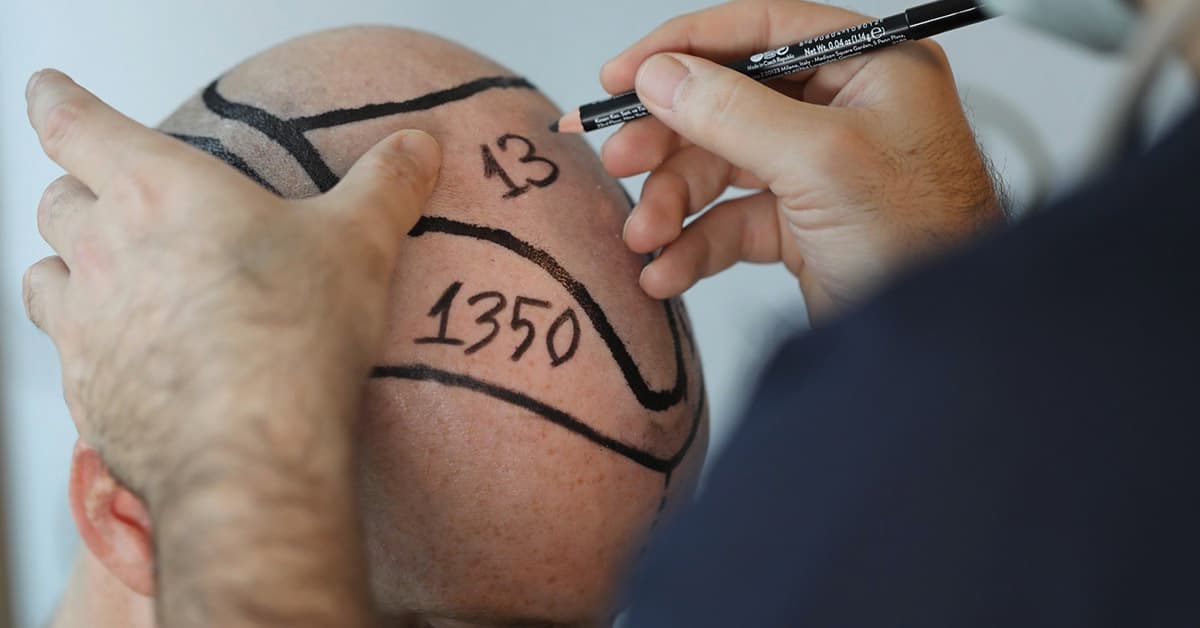
If you have started researching hair transplants, you will run into the word “graft” almost immediately. Understanding what a graft actually is, how it is harvested and what happens to it during implantation tells you a great deal about why some results look natural and others do not.
In this article we cover:
- What is a graft?
- What types of grafts are there?
- How does graft extraction and implantation work?
- What affects graft numbers and graft survival?
Everything is explained in straightforward terms, without the marketing gloss.
What Is a Graft?
A graft is the small piece of tissue used in a hair transplant that contains one or more hair follicles. Grafts are taken from the donor area — usually the back of the head and behind the ears — and placed one by one into thinning or bald regions.
For a natural, lasting result, it matters that:
- The grafts are healthy,
- They are harvested and stored with the right technique,
- They are placed at the correct angle and direction during implantation.
None of these steps can compensate for a failure in another.
Types of Grafts
Not every graft is the same. Grafts are grouped according to how many hairs they naturally contain.
1. Single Graft (One Hair)
- Contains 1 hair follicle
- Generally used along the front hairline
- Creates the softest, most natural transition
2. Double Graft (Two Hairs)
- Contains 2 hair follicles
- Preferred in areas that need moderate density
- Gives both a natural and a fuller appearance
3. Triple Graft (Three Hairs)
- Contains 3 hair follicles
- Used particularly in the crown and rear regions
- Ideal for areas where density is the priority
4. Quadruple Graft (Four Hairs)
- Contains 4 hair follicles
- Can be used to support very sparse, wide areas
- Chosen less frequently
The Graft Extraction Process
The first step in any hair transplant is selecting the donor area correctly.
1. Choosing the Donor Area
The donor area is usually:
- The nape of the neck (the most commonly used area)
- The area behind the ears
- The area above the ears
These regions are preferred because:
- They are more resistant to the hormone DHT
- They are less prone to thinning with age
- They contain follicles that tend to be permanent
2. Extraction Techniques
Two main extraction techniques are used in hair transplantation today:
FUE (Follicular Unit Extraction)
- Grafts are harvested one by one
- When performed correctly, it does not leave a visible linear scar
- Recovery is generally more comfortable
- It is one of the most modern and widely used methods today
FUT (Follicular Unit Transplantation)
- A strip of tissue is removed from the donor area
- It can leave a linear scar where the strip was closed
- It may allow a larger number of grafts to be harvested in a single session
- It is a classic method, chosen far less often than FUE today
3. Calculating the Number of Grafts
The number of grafts used in a hair transplant varies from person to person and is planned according to:
- The size of the recipient area
- The density you are aiming for (natural / medium / high)
- The capacity and quality of the donor area
- Your age, hair characteristics and expectations
Typical graft ranges:
- Front hairline: 500 – 1,000 grafts
- Mid-scalp: 1,000 – 2,000 grafts
- Larger bald areas: 2,000 – 4,000+ grafts
These figures are for general guidance only. Final planning always requires an in-person examination.
The Implantation Process
Once harvested, grafts are prepared and then placed into the recipient area. This stage is critical for both the aesthetic outcome and graft survival.
1. Opening the Channels
- In the Sapphire FUE technique, micro-channels are opened with special diamond sapphire blades
- Along the front hairline, channels are opened finer and closer together
- In the crown and rear regions, channels of a more appropriate width are used
The aim is for grafts to be placed:
- At the correct angle,
- In line with the natural direction of hair growth,
- Without damaging the surrounding tissue.
2. Placing the Grafts
- Grafts are placed one by one into the prepared channels
- The direction, angle and exit point of each hair is set carefully
- The front is designed to look natural, the rear to carry more density
3. Graft Survival
How well grafts take after implantation directly determines the success of the operation. The main factors are:
- The technique used and the quality of the implantation
- Whether grafts are kept in the right conditions after extraction
- The patient's general health
- How closely aftercare instructions are followed
What Affects Graft Quality
1. Donor Area Quality
- Healthy, strong follicles
- Sufficient density in the donor area
- Follicles that are genetically permanent
2. Surgical Technique
- Modern, tissue-respecting techniques such as Sapphire FUE
- Harvesting grafts with as little trauma as possible
- A controlled process led by an experienced team
3. Aftercare
- Following the washing and care instructions exactly
- Avoiding scratching, rubbing and any trauma to the area
- Attending your follow-up appointments
- Being patient: hair transplant results generally take up to 12 months to settle fully
Graft Survival Rates
After a well-planned hair transplant:
- Graft survival is often reported in the 90% – 95% range
- With an experienced team and an appropriate technique, this figure can be higher in some cases
- Sound planning, careful execution and disciplined aftercare all feed directly into it
Keep in mind: every patient has a different hair type, skin type and healing rate, so results vary from person to person.
Graft Extraction and Implantation at Nirvana Hair
At Nirvana Hair we tailor the hair transplant process to each patient:
- We work with the modern Sapphire FUE technique
- We plan graft numbers around your hair characteristics, facial proportions and expectations
- We explain the process fully before, during and after the operation
- We stay with you throughout with scheduled check-ups and follow-up appointments
Our aim is not simply to perform a hair transplant, but to help you reach a result that is natural, suits your face and still satisfies you years later.
In Summary
The graft is the concept at the centre of the entire hair transplant process. A successful outcome depends on:
- Harvesting grafts from the right area with the right technique,
- Planning that is built around the individual,
- Careful implantation and a disciplined follow-up process.
At Nirvana Hair, our experienced team and modern techniques are directed at one goal: natural, satisfying results that hold up over time. Get in touch for detailed information and a free initial consultation.